(The following transcript has been revised and polished for clarity and conciseness without losing the essence of the conversation in this episode.)
VO: Welcome to Women Wisdom Worth, the podcast series from Uplevyl, where we learn from women around the world about what they’re doing to find success and joy in this digital age. For show notes and free bonus resources, visit Uplevyl.com/podcast. We’d love it if you subscribe, like, leave a nice review, and share the show with your friends and colleagues. And remember to check out Uplevyl.
Uplevyl is the global leader of women-trained generative AI transforming society and business, featuring women-centric data inputs, insight, and advice. You’ll find all the answers you need in a way that works for you as you navigate the complexities of modern life. Check it out on Uplevyl.com. Let’s get started with your host, Sara Bhonsale. Over to you, Sara.
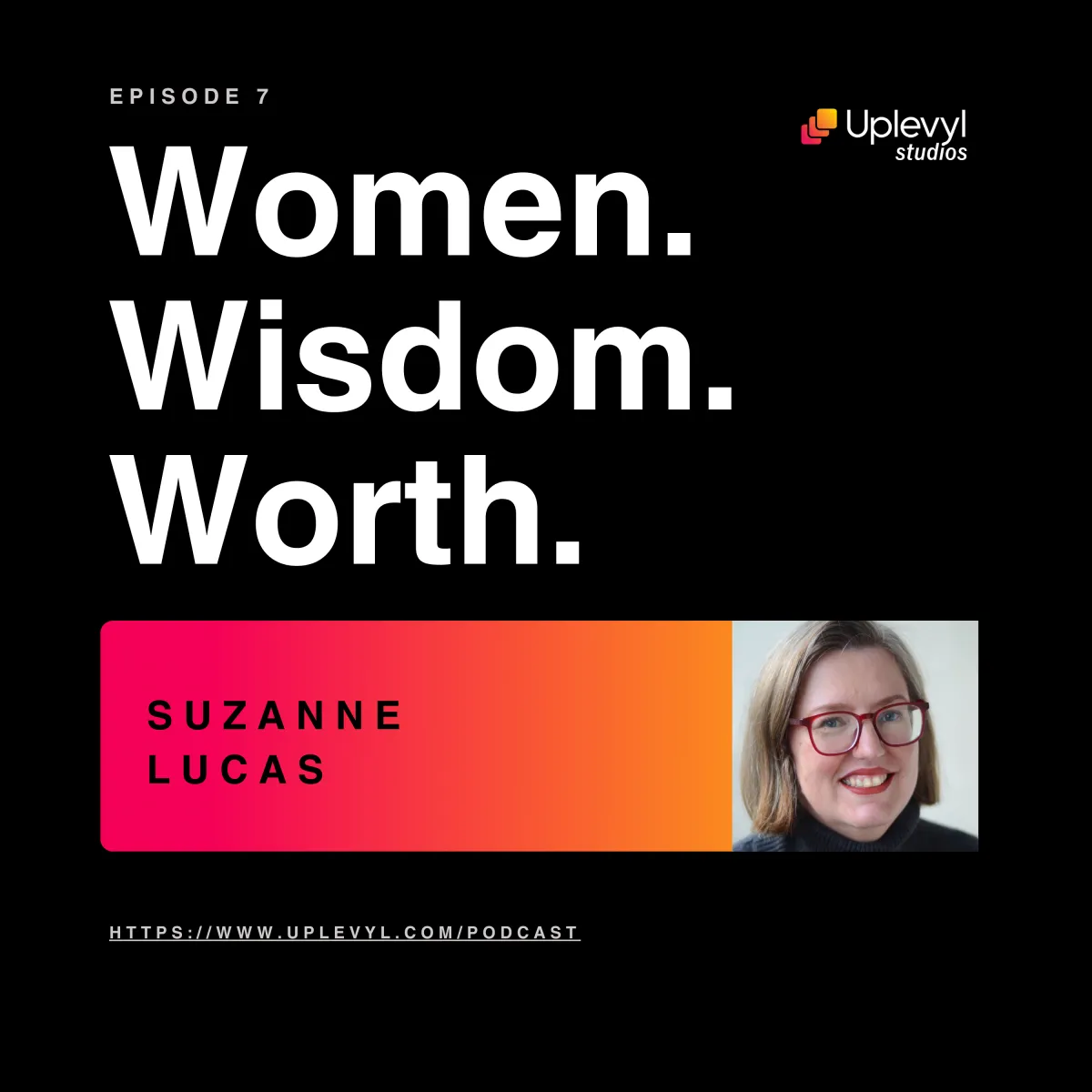
Sara Bhonsale: I’m so happy to have you today on the Uplevyl podcast. We’re talking with Suzanne Lucas, also known as the Evil HR Lady. Suzanne is originally from the U.S. and now lives in Switzerland. She is an international HR consultant who spent a decade in corporate HR doing hiring, firing, and working closely with legal teams. She now runs her own firm, advising people and companies on how to build effective human resources departments.
You may know Suzanne for creating the thriving online HR community, The Evil HR Lady, with over 31,000 members. She has her finger on the pulse of the modern workplace. Welcome, Suzanne. We’re so happy to have you.
I gave a brief introduction, but I’d love for you to share how you transitioned from being an HR professional to becoming the Evil HR Lady and how you ended up here.
Suzanne Lucas: Like many people, my life wasn’t planned this way. I have a son who is 16, and in Swiss schools there’s a lot of pressure to know what you want to do early. I always tell him to ignore that. Very few people are doing at 50 what they thought they wanted to do at 16 or even 30.
I didn’t plan this life, but I love it. I worked in corporate HR as a labor and employment law consultant for a pharmaceutical company. I grew up reading advice columns and always wanted to be an advice columnist. When blogs became popular, I realized I could start one. Because I worked in a conservative industry and social media wasn’t common in 2006, I didn’t want to use my real name. I decided quickly to write about HR and call myself the Evil HR Lady, exposing HR realities.
A few years later, my husband got a job offer in Switzerland. We moved in 2009 for what was supposed to be two to three years. I planned to stay home with the kids and return to corporate life later. While blogging for fun, CBS News reached out and asked me to write for them. That’s when I realized there was an opportunity, and things grew from there. Fifteen years later, it has become the Evil HR Lady brand, including HR Learns, which focuses on practical training for HR professionals.
Sara Bhonsale: I want to go back to the early days of your blog. What did you see as the biggest misconception about HR at that time?
Suzanne Lucas: The biggest misconception then is still the biggest misconception now. Good HR is invisible. When HR does its job well, people don’t notice it. When it does a bad job, everything falls apart. If HR is well run, people ask why they need HR at all. If HR is poorly run, they blame HR. Either way, people don’t understand its value.
A well-functioning HR department protects the company, improves engagement, and reduces turnover. But most employees interact with HR only during hiring or when they’re in trouble. That shapes perception.
Sara Bhonsale: That’s such an important insight. I want to shift to AI for a moment. Uplevyl focuses on helping women close the gender gap in AI and technology. How do you see AI impacting HR today and in the future?
Suzanne Lucas: Many HR systems now claim to be powered by AI, especially applicant tracking systems. Some claim AI eliminates bias in hiring. We know that’s not true. Amazon famously tried this and found their system discriminated against women.
Removing names and dates from resumes can reduce bias, and I always recommend that if you’re using tools like ChatGPT, Copilot, or similar to evaluate resumes. Names alone reveal age, gender, ethnicity, and nationality. Removing them helps.
The biggest challenge with AI bias isn’t what we know; it’s what we don’t know. These systems reflect the data we’ve collectively produced online. AI doesn’t think; it repeats patterns. That’s why we need constant testing, auditing, and human judgment.
Sara Bhonsale: What advice do you give HR professionals to manage these risks?
Suzanne Lucas: Run regular checks. I frequently ask ChatGPT to compare skills for roles based on gender or race and watch how answers change. Ideally, they shouldn’t. When they do, it shows bias. The issue isn’t malicious intent; it’s statistical reality. If 93% of kindergarten teachers are women, that bias shows up in how content is written and learned by large language models.
Sara Bhonsale: Shifting to women and the future of work, data shows women’s jobs are more exposed to AI automation, yet women are less engaged with AI tools. How do you see opportunities and challenges ahead?
Suzanne Lucas: There are different levels of AI use. Many women will be advanced end users rather than developers. Knowing what to ask is critical. You don’t need to code to benefit from AI—you need to recognize which problems it can solve.
This is similar to knowing how to search effectively online. If you know the right question, AI can save enormous time. But it’s fallible. You must know enough to evaluate whether the answer is correct. AI gives confident answers, even when it’s wrong.
Sara Bhonsale: That critical thinking piece is so important.
Suzanne Lucas: Exactly. AI is excellent at basic tasks, but humans still need foundational skills to do advanced work. If people skip learning the basics, they won’t be able to assess AI outputs properly. That’s a serious risk in both education and the workplace.
Sara Bhonsale: Before we close, how can people connect with you?
Suzanne Lucas: I’m easy to find. Google Evil HR Lady. You can email me at evilhrlady.org, or at suzanne@hrlearns.com. I’m on LinkedIn, and HR professionals can join the Evil HR Lady Facebook group.
Sara Bhonsale: Thank you so much, Suzanne. This was an incredible conversation.
Suzanne Lucas: Thank you. There’s still so much more to talk about when it comes to AI.
VO: Thanks for joining us on Women Wisdom Worth, the podcast series from Uplevyl, where we learn from women around the world about what they’re doing to find success and joy in this digital age. For show notes and resources, visit Uplevyl.com/podcast. Subscribe, like, leave a review, and share the show with friends and colleagues. And remember to check out Uplevyl, the global leader of women-trained generative AI featuring women-centric data inputs, insight, and advice. Thanks, and see you soon.