
Table Of Contents
- What Does Chanel’s AI Moment Reveal About Bias In Technology?
- Why Do Women’s Realities Still Go Missing In AI Systems?
- How Can We Design AI That Represents Women More Accurately?
- Why Is Women’s Leadership In AI Governance Essential?
- What Makes This Moment So Critical For AI And Gender Equity?
- FAQs
1. What Does Chanel’s AI Moment Reveal About Bias In Technology?
When Leena Nair, CEO of Chanel, asked an AI tool to generate an image of her company’s senior leadership team, the result was startling — a lineup of men in suits. This, despite the fact that 76% of Chanel’s workforce is female, and 96% of its customers are women.
This wasn’t just a curious glitch. It illustrated a deeper, systemic issue: AI systems often reflect the biases of the data and designers behind them. When the information fed into AI tools underrepresents women’s real-world experiences, the algorithms end up perpetuating stereotypes rather than challenging them.
The Chanel example reminds us that if women’s stories aren’t built into the digital frameworks shaping tomorrow’s world, technology risks rebuilding a version of society that leaves them out.
2. Why Do Women’s Realities Still Go Missing In AI Systems?
The absence of women’s experiences in AI systems isn’t accidental; it’s structural. Many AI models are trained on historical data that already reflect existing gender imbalances.
For instance, global data from the Organisation for Economic Co-operation and Development (OECD) shows that women make up a smaller share of AI-related roles (particularly in science, engineering, and technology leadership) while still performing most unpaid care work.
As a result, the “default worker” in AI training data often looks like a male, full-time employee with a linear career path.
That means systems trained on such data may unintentionally penalize women for taking career breaks, working part-time, or managing flexible schedules — even though these realities are common and valuable.
The risk is not just exclusion, but reinforcement of outdated norms through advanced technology. In other words, bias becomes automated.
3. How Can We Design AI That Represents Women More Accurately?
Creating AI that truly reflects women’s lives requires intentional design, inclusive data, and ethical oversight.
This is not about adding women as an afterthought; it’s about ensuring that women’s lived experiences shape AI from the ground up.
Here’s how organizations can start:
- Diversify Data Sources: Include examples of non-linear careers, flexible work arrangements, and caregiving responsibilities in AI training data.
- Co-Create With Women: Engage women as co-designers, developers, and testers, not just as end users.
- Redefine Success Metrics: Move beyond measuring productivity or output alone; include metrics like adaptability, emotional intelligence, and collaboration.
- Apply Human Oversight: Use diverse review boards to regularly audit AI systems for bias and fairness.
The goal isn’t just fairness. It’s about building AI that sees women as they are — leaders, caregivers, innovators, and creators — and designs around their strengths, not their supposed limitations.
4. Why Is Women’s Leadership In AI Governance Essential?
Bias in technology doesn’t just appear in data; it’s also shaped by who makes decisions about how AI is built and deployed.
Having more women in AI governance, ethics, and leadership roles is critical to ensuring that diverse perspectives shape the systems of the future.
Women leaders bring invaluable insights into how inclusion, transparency, and relational intelligence can guide innovation. Their involvement helps shift the conversation from compliance to conscience, from “Can we build this?” to “Should we build this, and for whom?”
When women help set AI policy and strategy, they ensure that ethics, empathy, and equity become integral parts of the code, not afterthoughts.
5. What Makes This Moment So Critical For AI And Gender Equity?
We are at a pivotal point. The rapid rise of AI coincides with a redefinition of work, leadership, and economic opportunity.
If women’s experiences are not actively embedded into this transformation, technology could unintentionally widen existing inequities under the guise of progress.
However, this is also a historic opportunity. By investing in women-led innovation, diversifying data pipelines, and building transparent systems, we can create an AI-powered economy that values care, collaboration, and inclusion as much as speed and scale.
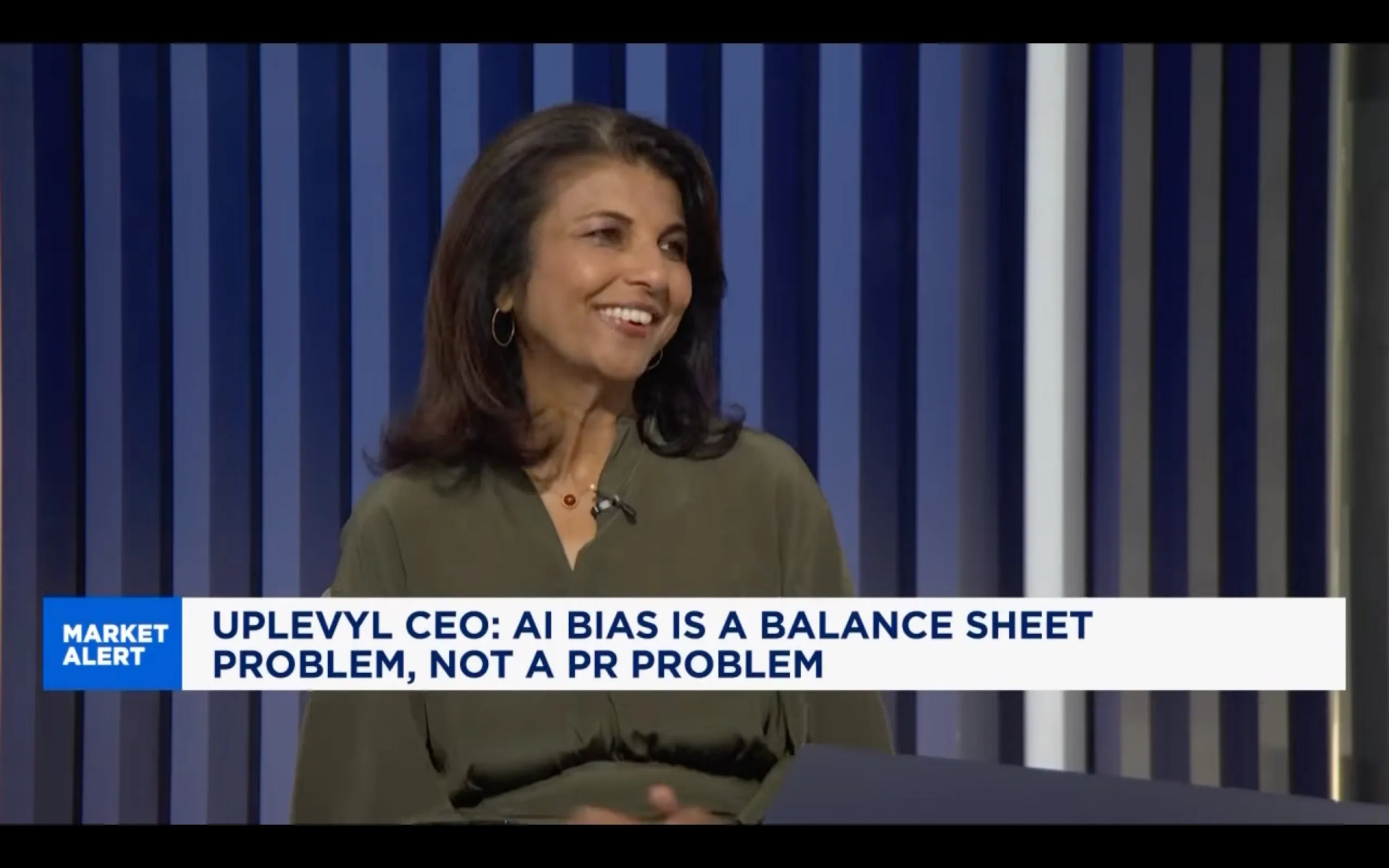
As Uplevyl’s Founder & CEO, Shubhi Rao, and other women leaders emphasize, the future of AI is not just about algorithms; it’s about who they allow to thrive.
6. FAQs
1. What Does The Chanel Example Reveal About AI Bias?
It highlights how AI can unintentionally reflect societal biases when trained on unbalanced or incomplete datasets that underrepresent women.
2. How Does Bias Get Built Into AI Systems?
Bias often enters through training data, algorithms, or design teams that lack gender and cultural diversity.
3. What Can Organizations Do To Reduce AI Bias?
They can diversify their data sources, include women in the design process, and regularly audit AI outputs for fairness and representation.
4. Why Is Women’s Leadership In AI So Important?
Women leaders bring essential perspectives that prioritize ethics, inclusivity, and relational intelligence — helping shape AI that benefits everyone.
5. How Is Uplevyl Contributing To Gender-Equitable AI?
Uplevyl empowers women leaders through community, learning, and dialogue, ensuring they play a central role in shaping ethical, inclusive, and future-ready AI systems.