
Table of Contents
- What Is Emotional Intelligence?
- How Do Emotional Intelligence And AI Connect?
- Why Does Emotional Intelligence Matter For Leadership?
- What Is the Takeaway?
- FAQs
1. What Is Emotional Intelligence?
Emotional Intelligence (EI) is the ability to perceive, understand, manage, and respond to emotions in oneself and others. First introduced by psychologists Peter Salovey and John Mayer and popularized by Daniel Goleman, EI has become a cornerstone of leadership, strong relationships, and personal growth.
2. How Do Emotional Intelligence And AI Connect?
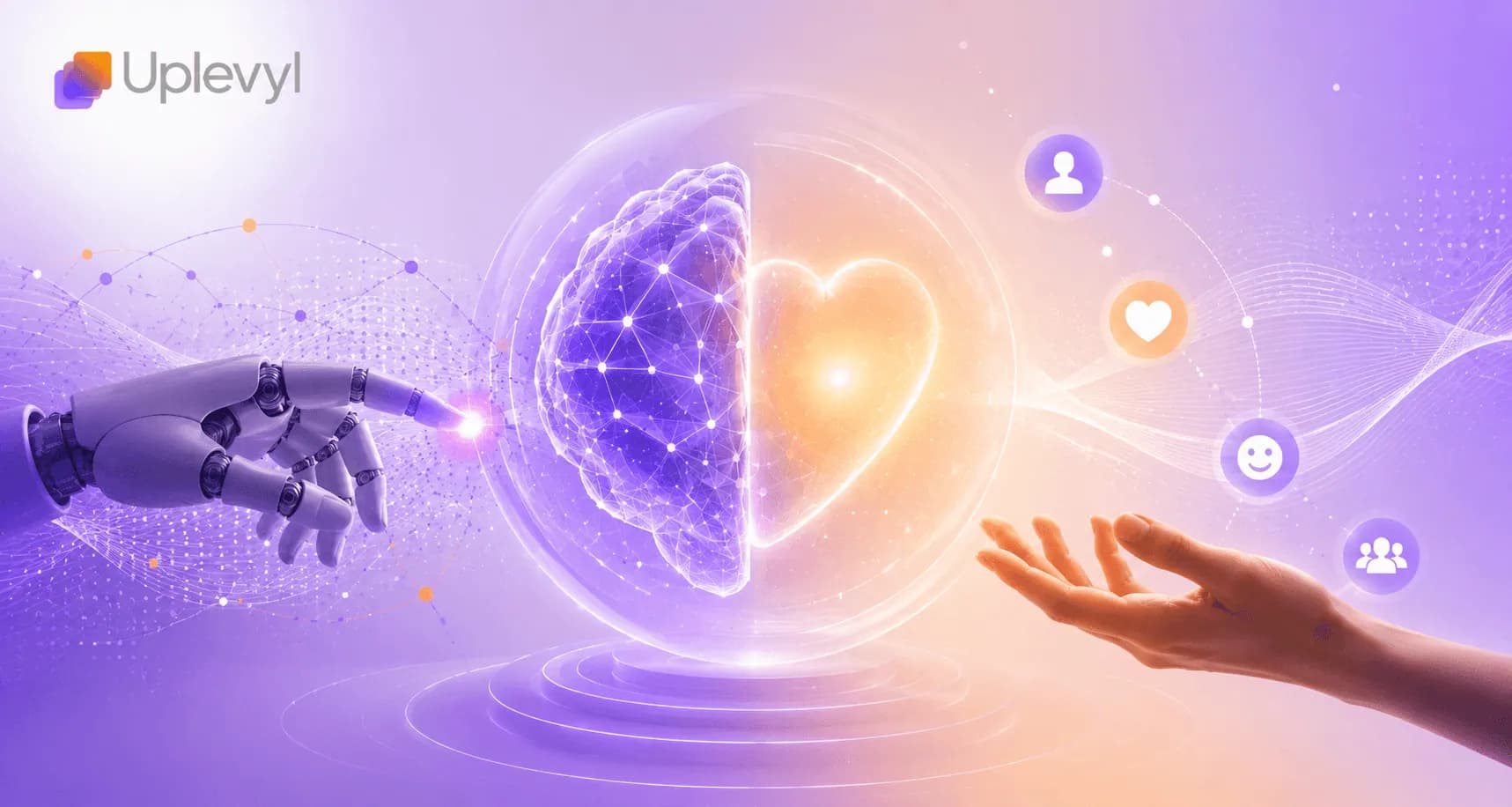
AI continues to grow rapidly — reshaping roles, industries, and how organizations operate. By 2025, it is projected to displace 85 million jobs while creating 97 million new ones that demand uniquely human skills such as empathy, adaptability, and decision-making.
While AI excels at data processing and automation, it cannot replicate the encouragement, trust, or understanding that comes from human connection. Emotional intelligence fills this gap.
- A LinkedIn survey found that 57% of business leaders consider EI and other “soft skills” more important than technical skills during hiring.
- Nearly 90% of top performers have high EI, according to a Harvard Business Review study.
- Organizations that prioritize EI see as much as a 20% productivity boost.
Balancing technological advancement with emotional intelligence is increasingly essential for long-term success.
3. Why Does Emotional Intelligence Matter For Leadership?
The shift toward remote and hybrid work has made emotionally intelligent leadership more important than ever. Without face-to-face interaction, leaders must rely on empathy and communication to maintain morale and trust.
- Companies with emotionally intelligent leaders experience a 34% higher employee retention rate.
- TalentSmart research shows leaders with high EI outperform peers by 37% in key metrics such as employee satisfaction and productivity.
- Studies show that 90% of successful leaders exhibit high emotional intelligence, highlighting its role in decision-making and sustainable outcomes.
In the AI age, emotionally intelligent leaders are better positioned to:
- Support employees through transitions in automation.
- Address anxieties about job security.
- Maintain positive organizational culture during rapid change.
Leadership today is not just about technical expertise — it is about combining human sensitivity with strategic insight.
4. What Is the Takeaway?
AI can analyze data and automate processes, but it cannot replace the human capacity for empathy, ethical reflection, and emotional awareness. These are the qualities that make leaders effective in times of transformation.
At Uplevyl, we believe that strengthening emotional intelligence alongside technical skills is the key to preparing women leaders for the future of work. Our mission is to provide the resources and community needed to navigate this era with confidence.
5. FAQs
1. How is emotional intelligence different from artificial intelligence?
Emotional intelligence (EI) focuses on understanding, managing, and responding to emotions, while artificial intelligence (AI) processes data and automates tasks. In the modern workplace, combining EI with AI ensures technology serves human values rather than replacing them.
2. Why is emotional intelligence becoming more important in the age of AI?
As automation takes over technical tasks, skills like empathy, communication, and adaptability become essential for leadership and collaboration. Emotional intelligence helps professionals navigate change and maintain trust in tech-driven workplaces.
3. How does emotional intelligence improve leadership performance?
Leaders with high EI foster stronger team morale, make balanced decisions, and manage conflict effectively. Research shows emotionally intelligent leaders achieve higher retention, productivity, and innovation across their teams.
4. Can emotional intelligence be developed through training or practice?
Yes. Emotional intelligence improves with self-awareness, feedback, and coaching. Practicing empathy, reflection, and emotional regulation builds resilience and strengthens leadership capacity over time.
5. What role does emotional intelligence play in managing AI-driven teams?
As hybrid and AI-supported work models expand, leaders must connect human and digital workflows. Emotional intelligence helps managers motivate teams, address fears around automation, and sustain engagement through constant change.
6. How can organizations build a culture that values emotional intelligence?
Companies can integrate EI into hiring, training, and leadership development. Encouraging open communication, empathy-based management, and psychological safety promotes both innovation and well-being in AI-enhanced environments.