Table Of Contents
- Why Do Data Foundations Matter For AI In Nonprofits?
- How Can Nonprofits Clean And Structure Their Data Effectively?
- What Does It Take To Integrate Data Across Systems?
- How Can Nonprofits Secure And Govern Their Data Responsibly?
- Why Is Data Capacity Building So Important?
- How Can Partnerships Expand Data Possibilities For Nonprofits?
- What Does A Future Built On Strong Data Foundations Look Like?
- How Is Uplevyl Supporting Data-Driven Nonprofit Leadership?
- FAQs
1. Why Do Data Foundations Matter For AI In Nonprofits?
AI offers nonprofits the potential to expand reach, efficiency, and community impact. But even the most advanced tools cannot succeed without solid data foundations.
When data is fragmented, outdated, or inconsistent, AI systems cannot function effectively. Instead of unlocking insights, they amplify confusion. For nonprofits, this issue is critical: donor databases, program files, volunteer records, and financial spreadsheets often sit in silos, disconnected from one another.
Without integration:
- Decisions stall because data is unreliable.
- Opportunities are missed when insights remain buried.
- Communities suffer when program design isn’t informed by timely feedback.
A strong data foundation isn’t a technical luxury; it’s mission infrastructure that powers trust, transparency, and impact.
2. How Can Nonprofits Clean And Structure Their Data Effectively?
Before thinking about predictive analytics or AI, organizations must start with data hygiene — the unglamorous but essential work of cleaning and organizing existing data.
Key Steps To Build Data Integrity
- Audit What Exists: Identify where your data lives — donor CRM, event platforms, financial systems, or surveys. Note duplicates and outdated entries.
- Standardize Formats: Ensure consistency in names, dates, and categories to improve accuracy and analysis.
- Validate Regularly: Build routines for data verification and error correction.
- Document Processes: Maintain a clear “data dictionary” to ensure uniform understanding across teams.
Skipping this step is like building a house on sand. Strong data discipline is what transforms raw information into actionable intelligence.
3. What Does It Take To Integrate Data Across Systems?
Clean data has limited value if it remains isolated. Integration, which is the process of connecting data systems, is what turns fragmented information into insight.
Practical Integration Approaches
- Shared Databases: Create a central repository that becomes the single source of truth.
- APIs And Middleware: Use connectors that allow legacy systems to communicate.
- Modular Upgrades: If replacement isn’t possible, integrate high-priority systems first (e.g., donor management with volunteer tracking).
- Human Oversight: Even with automation, trained review ensures accuracy and relevance.
When integration works, leaders gain access to clear, real-time answers to vital questions — such as which programs are most effective or which donors are most engaged.
4. How Can Nonprofits Secure And Govern Their Data Responsibly?
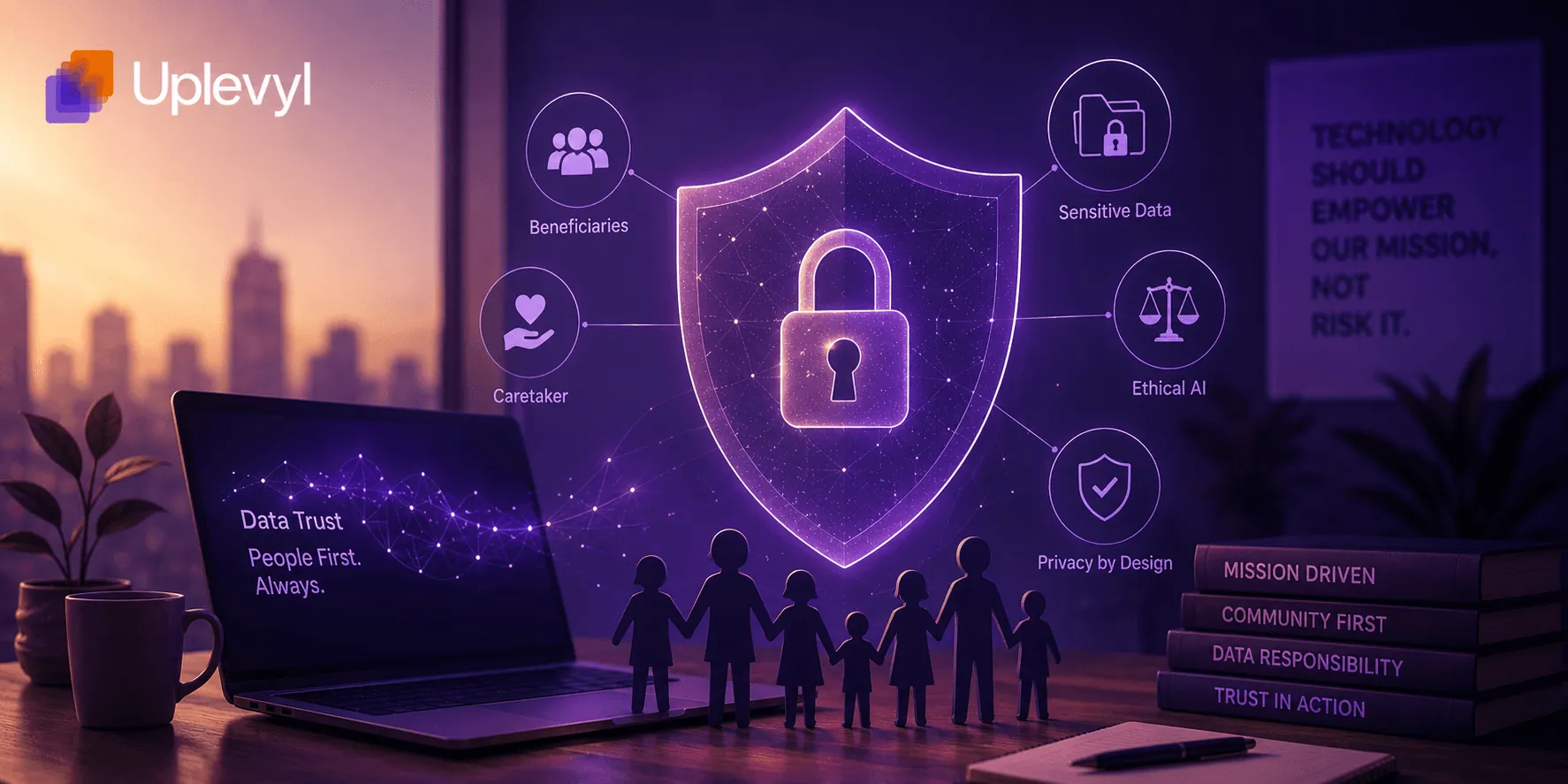
Nonprofits hold some of the most sensitive information — from community demographics to donor financial data. Trust, once lost, is hard to rebuild. That’s why security and governance are essential to every data strategy.
Best Practices For Data Governance
- Establish Clear Ownership: Define who controls, updates, and accesses each data source.
- Adopt Privacy-First Policies: Comply with all relevant laws (such as GDPR or local privacy regulations).
- Train Staff Regularly: A secure system depends on informed users.
- Create Ethical Guardrails: Ensure that every data use aligns with the organization’s mission and values.
Responsible governance does not slow innovation; it safeguards it, ensuring that technology serves people, not the other way around.
5. Why Is Data Capacity Building So Important?
A common misconception is that strong data systems require large technical teams. In reality, data confidence begins with culture, not code.
Building Data Capacity
- Upskill Teams Gradually: Provide training that enhances data literacy, not just technical skill.
- Encourage Learning Culture: Make it safe to experiment, analyze, and learn from insights.
- Secure Leadership Buy-In: Executive and board support legitimizes investments in data.
- Leverage Partnerships: Universities, civic tech groups, and trusted vendors can provide affordable expertise.
Data readiness is not about perfection; it’s about progress and building long-term organizational confidence.
6. How Can Partnerships Expand Data Possibilities For Nonprofits?
No nonprofit should have to “go it alone” when it comes to data. Partnerships amplify resources, enhance expertise, and strengthen insight.
Partnership Opportunities
- Cross-Sector Collaborations: Share anonymized data to uncover broader social trends.
- Shared Platforms: Collaborate with peers through secure, joint databases.
- Technology Partnerships: Work with vendors who align with your mission and respect data ethics.
- Funders As Allies: Encourage grantmakers to invest in data infrastructure, not just programs.
When chosen carefully, partnerships expand capacity without compromising nonprofit independence or values.
7. What Does A Future Built On Strong Data Foundations Look Like?
When nonprofits establish clean, connected, and ethical data systems, AI becomes a force multiplier rather than a complication.
Such systems enable:
- Sharper Decision-Making: Leaders move from intuition to insight.
- Stronger Relationships: Donors and volunteers see their contributions reflected and respected.
- Greater Community Impact: Programs adapt faster and respond better to real needs.
Data is not an afterthought; it is mission-critical infrastructure, as essential as people or funding.
8. How Is Uplevyl Supporting Data-Driven Nonprofit Leadership?
At Uplevyl, we understand that nonprofit leaders often juggle disconnected systems while trying to stay mission-focused. Our platform bridges this divide by combining data, community, and AI into one secure, integrated ecosystem.
- Unified Systems: Connect onboarding, content, events, and analytics in one place.
- AI-Powered Assistants: Built-in gender-intelligent AI agents streamline reporting, communication, and donor management.
- Transparency And Trust: We prioritize privacy, data ethics, and long-term sustainability.
For women-led nonprofits, Uplevyl offers not just technology but partnership. We help leaders transform their relationship with data from a source of stress to a source of strength.
9. FAQs
1. Why Is Data So Important For AI In Nonprofits?
AI systems rely on quality data to function effectively. Poor or inconsistent data undermines insights and decision-making.
2. How Can Small Nonprofits Begin Building Data Infrastructure?
Start with simple steps: audit your current data, clean inconsistencies, and integrate your most used systems first.
3. What’s The Safest Way To Manage Donor And Community Data?
Establish privacy policies, limit access to sensitive data, and train staff regularly on cybersecurity best practices.
4. How Can Partnerships Improve Nonprofit Data Capabilities?
Collaborating with funders, tech partners, and peer organizations helps nonprofits share knowledge, tools, and insights responsibly.
5. What Role Does Uplevyl Play In Data Transformation?
Uplevyl provides a secure, integrated platform that merges AI, analytics, and community learning to support women leaders in building resilient, data-driven organizations.