
Table of Contents
- What Does Juneteenth Represent for Modern Professionals?
- Why Is Leadership About Expanding Who We See as Capable?
- How Can History Inspire Today’s Women Leaders?
- What Lessons Does Juneteenth Offer for the Global Workforce?
- How Can Organizations Build Stronger Leadership Pipelines?
- What Does Moving Forward With Purpose Look Like?
- FAQs
1. What Does Juneteenth Represent for Modern Professionals?
Juneteenth marks June 19, 1865 — the day when Union troops arrived in Galveston, Texas, to announce the freedom of enslaved people, more than two years after the Emancipation Proclamation. Today, it stands as a milestone of perseverance and progress.
Beyond its historical significance, Juneteenth also serves as a reminder that progress takes time — and that leadership often comes from those who continue working toward change, even when results are delayed.
For modern professionals, Juneteenth is a moment to reflect on how far society has come and how we can continue expanding access to growth, leadership, and opportunity across industries.
2. Why Is Leadership About Expanding Who We See as Capable?
Every era defines leadership differently. Too often, the traditional idea of a “leader” has been narrow — shaped by hierarchy or title, rather than by contribution, innovation, or perseverance.
Juneteenth invites us to look again at who drives progress. History shows that women, particularly those balancing multiple responsibilities, have long built communities, organized solutions, and led change from the ground up. These are not side stories; they are models of strategic leadership, resilience, and adaptability.
By broadening our understanding of leadership, we make room for more capable people — and more ideas — to influence the future of work.
3. How Can History Inspire Today’s Women Leaders?
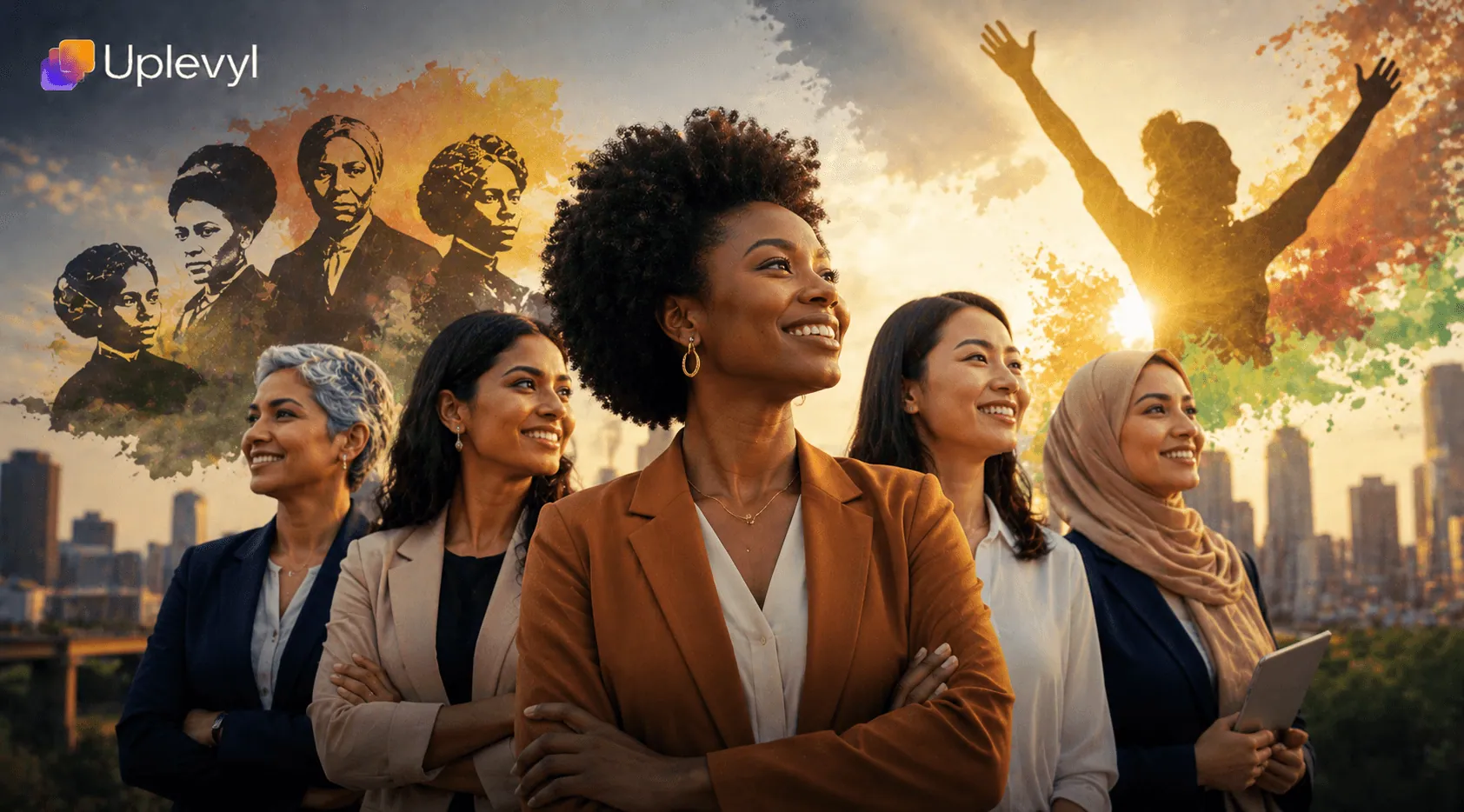
Many of history’s most effective changemakers didn’t wait for recognition — they led with courage and purpose. Figures such as Harriet Tubman and Sojourner Truth demonstrated problem-solving, vision, and emotional strength that remain deeply relevant to women leaders today.
These stories serve as blueprints for modern resilience. They show how leadership often means solving practical problems, building trust, and sustaining communities — qualities vital to navigating today’s fast-changing workforce.
By revisiting these examples, women professionals can find renewed motivation to lead in ways that are authentic, collaborative, and forward-looking.
4. What Lessons Does Juneteenth Offer for the Global Workforce?
Juneteenth’s message — freedom through perseverance — resonates far beyond one nation. Around the world, women continue to seek greater participation in leadership and decision-making. While challenges differ across countries, the theme is consistent: unlocking the full potential of talent strengthens economies, organizations, and societies.
In emerging markets, for instance, women entrepreneurs are driving innovation in finance, healthcare, and education despite limited access to capital or infrastructure. In developed economies, women leaders are reshaping how companies view flexibility, hybrid work, and productivity.
Each example reinforces a universal truth: when women have the tools and opportunities to participate fully, the entire workforce grows stronger.
5. How Can Organizations Build Stronger Leadership Pipelines?
Juneteenth is not only a day of reflection — it’s also a call to action for companies to strengthen participation pathways and leadership readiness.
Practical steps include:
- Investing in development programs that prepare women for senior leadership roles.
- Creating mentorship networks that connect experienced professionals with rising talent.
- Recognizing contributions beyond traditional metrics, including collaboration, innovation, and long-term impact.
- Adopting flexible work structures that allow professionals to contribute fully at every life stage.
When organizations prioritize participation, performance improves. Studies show that companies with balanced leadership outperform peers in decision-making, creativity, and profitability.
6. What Does Moving Forward With Purpose Look Like?
Honoring Juneteenth is ultimately about honoring perseverance — the commitment to growth even in the face of challenge. For professionals, it’s a reminder that leadership and opportunity must continually expand.
At Uplevyl, we believe this progress starts with access: access to knowledge, mentorship, networks, and tools that help women thrive. Whether through digital upskilling, leadership programs, or professional communities, the goal is the same — to equip women to lead with confidence in every sector.
The lesson of Juneteenth is timeless: freedom and opportunity are not one-time achievements but ongoing efforts. Each generation carries the responsibility to open doors wider than before.
Ready to grow your leadership journey?
Explore how Uplevyl helps women professionals strengthen their skills, confidence, and digital readiness for the future of work. Visit http://www.uplevyl.com or connect with us at eva@uplevyl.com
7. FAQs
1. What does Juneteenth represent for modern professionals?
Juneteenth, marking June 19, 1865, celebrates the delayed but decisive enforcement of emancipation in the U.S. Today, it stands as a symbol of perseverance, progress, and the ongoing pursuit of equality. For professionals, Juneteenth is both a reflection point and a call to expand access — ensuring that leadership, opportunity, and recognition are shared more equitably across workplaces and industries.
2. Why is leadership about expanding who we see as capable?
True leadership isn’t defined by titles — it’s defined by influence, problem-solving, and resilience. Juneteenth reminds us that progress often comes from those working outside traditional hierarchies. By broadening our definition of leadership to include diverse voices and experiences — especially women and historically underrepresented groups — organizations unlock innovation, adaptability, and stronger decision-making.
3. How can history inspire today’s women leaders?
History offers powerful examples of women who led with courage and strategy, even without formal power. Figures like Harriet Tubman and Sojourner Truth demonstrated leadership rooted in vision, empathy, and persistence — qualities still essential in today’s fast-changing workplaces. These stories remind modern women professionals that leadership means solving real problems, sustaining communities, and leading authentically.
4. What lessons does Juneteenth offer for the global workforce?
Juneteenth’s central message — freedom through perseverance — resonates worldwide. It highlights that equitable participation fuels progress everywhere.
-
In emerging economies, women entrepreneurs are innovating in health, finance, and education.
-
In developed markets, women leaders are redefining hybrid work, productivity, and inclusion.
The lesson is universal: when women and underrepresented voices participate fully, organizations and societies grow stronger.
5. How can organizations build stronger and more inclusive leadership pipelines?
Juneteenth calls leaders to act, not just reflect. Organizations can strengthen leadership pipelines by:
-
Investing in leadership development and mentorship for women and emerging talent.
-
Recognizing impact beyond traditional metrics like titles or tenure.
-
Embedding flexibility and inclusivity into work design.
-
Creating measurable goals for representation at every level.
Studies consistently show that diverse leadership teams outperform peers in innovation, decision-making, and profitability.
6. What does moving forward with purpose look like for women leaders and organizations?
Moving forward means turning reflection into responsible action. For individuals, it means committing to growth, mentorship, and lifelong learning. For organizations, it means creating access to leadership, upskilling, and networks that enable women to thrive. As Uplevyl emphasizes, Juneteenth’s lesson endures: progress is not a single milestone — it’s a shared, ongoing responsibility to open doors wider than before.