History does not remember everyone who deserved to be remembered. It remembers the people who made sure the record was set straight.
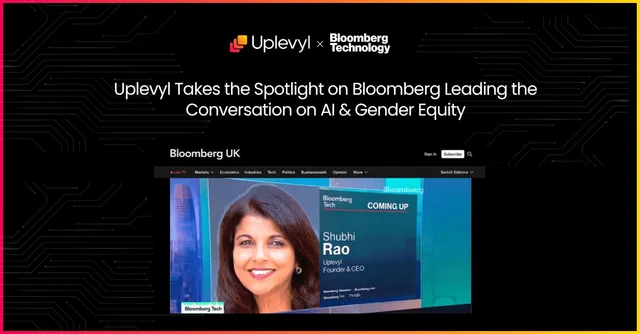
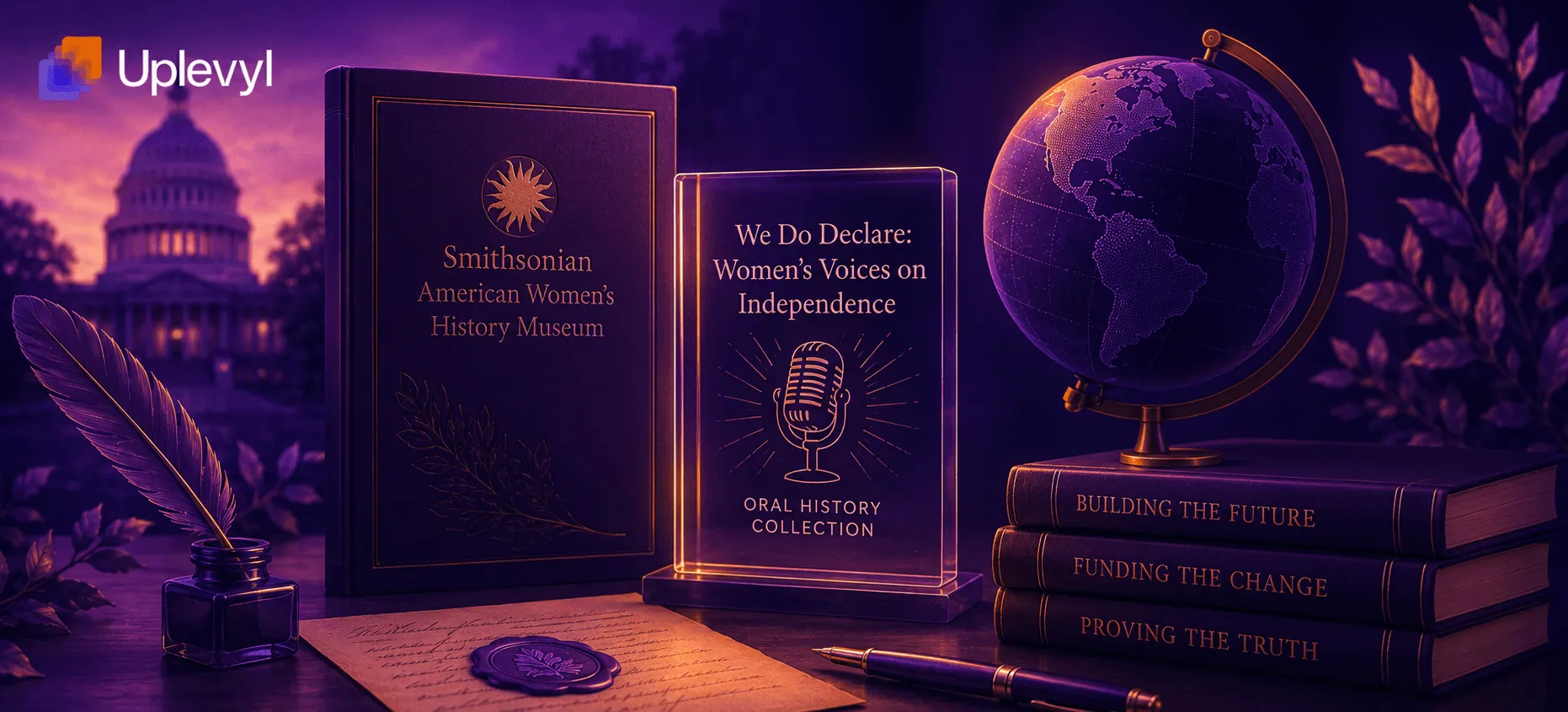
This Women's History Month, the Smithsonian American Women's History Museum selected three members of the Uplevyl leadership team for its landmark oral history series, We Do Declare: Women's Voices on Independence (opens in a new tab). Our Founder and CEO Shubhi Rao, Lead Investor and Chief Engagement Officer Jacki Zehner, and Innovation and Research Advisor Dr. Patricia Greene have each recorded a five-minute interview that now sits in the Smithsonian's permanent digital archive.
Three women. Three different entry points into the same stubborn fight. All of them in the record now.
Why the Smithsonian Launched This Series Now
We Do Declare was created to mark the 50th anniversary of the Equal Credit Opportunity Act of 1974 — the federal law that finally made it illegal for a bank to refuse a woman credit simply because of her sex or marital status. Before 1974, a woman in America could not open a bank account, get a mortgage, or obtain a credit card in her own name without a man's co-signature. That changed in law 51 years ago. The economic architecture it left behind has not changed nearly as much.
The three Uplevyl women leaders chosen for this archive represent three distinct levers of change: the builder who designs the future system, the financier who funds who gets to build it, and the researcher who proves, with data, that the problem was always real.
Shubhi Rao: The Data That Was Never Built
Shubhi’s interview is about what she saw when she was inside Silicon Valley watching the foundations of the AI era being laid. From her vantage point at Alphabet/Google, the pattern was impossible to miss: the future was being trained on data, and women were almost entirely absent from the datasets and from the rooms where the decisions were made. "AI cannot work for women if gender data doesn't exist," is both the founding insight behind Uplevyl and the warning she delivers to the Smithsonian's record.
Watch Shubhi's interview (opens in a new tab)
Jacki Zehner: The Money Behind the Movement
In 1996, at 32, Jacki became the youngest woman and the first female trader to make partner at Goldman Sachs. She describes in her interview what it cost to be that person in that institution at that time, and why it propelled everything that came after: her co-founding of Women Moving Millions, which has channeled over one billion dollars toward women and girls globally, and her founding of SheMoney, dedicated to "women's financial agency and wellness."
Jacki has spent her career naming that gap and funding the infrastructure to close it. At Uplevyl, she continues that work with passion and vigor.
Watch Jacki's interview (opens in a new tab)
Dr. Patricia Greene: The Research That Made the Problem Undeniable
When Dr. Greene and her colleague Candida Brush were in graduate school, they were warned that specializing in women and entrepreneurship would be, in her words, "the kiss of death" for their academic careers. They did it anyway. In 1999, they co-founded The Diana Project, the first rigorous, systematic research program to document the gap between women's entrepreneurial capability and their access to venture capital.
Dr. Greene went on to serve as the presidentially appointed 18th Director of the Women's Bureau at the US Department of Labor, where she continued translating research into policy.
Watch Dr. Greene’s interview (opens in a new tab)
What It Means That Three Uplevyl Women Are in This Archive
It is not common for three members of the same organization to be independently selected for a Smithsonian oral history series. It is worth sitting with why it happened here.
The answer is not that Uplevyl is exceptional. The answer is that the problem Uplevyl was built to address — the systematic exclusion of women from the ownership, authorship, and financial architecture of the technologies that are now governing economic life — is real, documented, and urgent enough that the Smithsonian is building a permanent record of the people who named it and chose to fight it.
Jacki's argument is about money: who has it, who directs it, and what it builds. Patty's argument is about evidence: if you can prove the system is failing women, you can change the system. Shubhi's argument is about architecture: if the infrastructure of AI is built without women in the data, every decision that flows from it will carry that absence forward. Together, the three arguments form a complete diagnosis of the moment we are in