
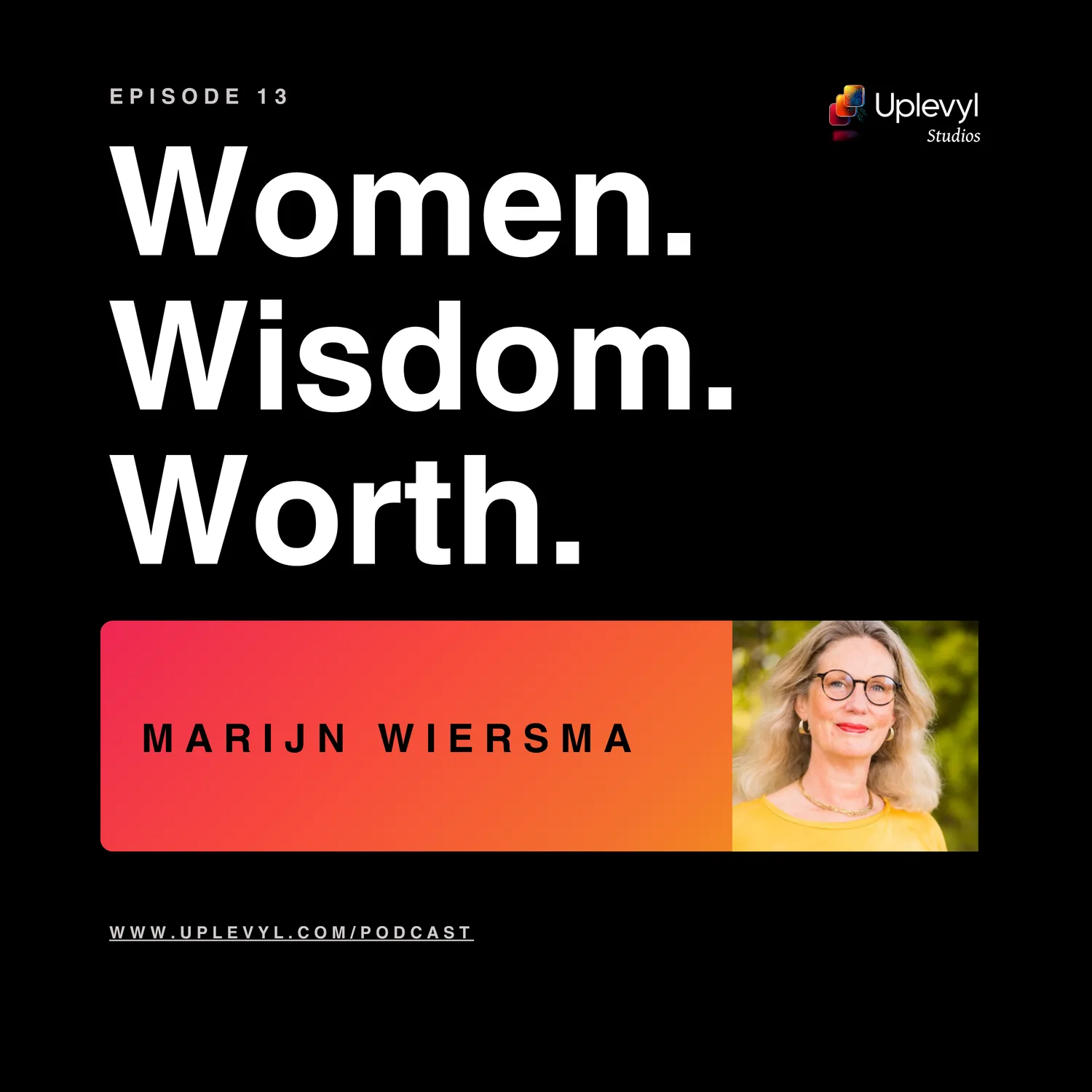
I am so very excited because today we have a very special guest on Women Wisdom and Worth that we have been trying to coordinate for a little while and now today is the day we have the pleasure of speaking with Morine Bierschma, a true force. In the fields of sustainable finance, leadership, and what we're going to be talking about today, gender equity, uh, Morine is a corporate anthropologist with a powerful vision for a more inclusive word world.
Sara Bhonsale: Uh, she's passionate about unlocking the potential of women, ensuring that we have access to finance and a seat at the decision making table and she is committed to solving world problems through transformative and inclusive approaches. Merine brings over 22 years of experience in sustainable development across Africa, Latin America, and Europe, and she is a recognized expert in ESG, environmental, social, and governance principles, and she co authored the influential book, Banking for a Better World, which explores how finance can be a tool for social change.
She also recently co authored a book, SOS, a Navigation Guide for Women at Work, and I am really looking forward to talking about that one today as well. She's also the founder of Zambia's first private nursing school, so she understands the real world impact, impact of aligning purpose with profitability.
And of course, Marijn's work goes beyond traditional finance. As we've already learned, she has created a docu series highlighting female role models in the financial sector. She's led powerful leadership programs for women across the globe. She coaches executives to thrive at the highest level. So what an impact you have made, Marijn.
Her experiences span 85 countries and her approach is marked by creativity, adaptability, and a deep commitment to integrity and inclusivity. So today she joins us to share insights from her latest book, her vision for gender equity and finance, and her belief in the power of women to reshape the future.
My goodness, Marijn, I am so honored to be sharing space with you today. Welcome.
Marijn Wiersma: Thank you very much, Sarah. It is, uh, it's always, um, lovely to hear somebody else, uh, introduce introduce you. It sounds impressive when you say it.
Sara Bhonsale: You have such an impressive background, and I love how diverse, uh, your modalities are for the work that you do.
A docu series, books, leadership training, seminars, and how you are in finance, but, um, really leveraging your work as an advocate for women in that space. Um, we don't see often enough Although we're fortunate to talk to the women who are doing the work on this podcast. And so I just know you're such a leader in the space and I'm happy to have you here today.
So, um, let's get started. I'd love to learn about your journey that led you to where you are today, um, sustainable development, corporate anthropology, but also equity and ESG, um, with your powerful insights and experience in finance. How did this happen? How did this come to be?
Marijn Wiersma: Yeah, I love that question.
Let me, let me actually start with the anthropologist. So, and I'll start there because I think there, there's an important story to, to share there. When I decided to study cultural anthropology in the 90s in the Netherlands, there were a lot of raised eyebrows, not from my family, my dad. studied anthropology.
So he was chopped, but you know, people were like, seriously, do you think you'll ever find a job? You know, who in his right mind wants to do, become an anthropologist? What is that even? Um, and so I lay and I, I did choose anthropology because I'm deeply interested in what, um, what most people, what, motivates people, um, what, uh, gets people's attention such that they can make a difference in the world, but you need to deeply understand what, what moves and motivates them.
So I thought this was an interesting study and it was, um, and remarkably, uh, many, many years later, here I am working in the financial sector. I, if you would have told me back in the day, I would have laughed so hard. It was like, me? Never. But here I am. Um, and, uh, why? I think because the financial sector is such a powerful, uh, lever for change also.
So you can see I'm looking for levers for change in, in, in my life and, and see how we can use them as a, as a force for, for, for good. So the financial sector being, you know, the, the, the, um, oil in the, that keeps machines going. Now, this is a, a, a, um, um, industrial analogy. I have to look for one that is more AI proof, but, uh, I'll find one, um, someday.
It works. It works. It works.
Sara Bhonsale: The oil, keeping the machine running works in AI also.
Marijn Wiersma: Yes. Anyway. Um, so, um, um, as an anthropologist, I have had the pleasure of studying people in the financial sector for, um, uh, I think the past 18 years now. And, um, I have a couple of questions that I'm slowly starting to get answers to, but my questions have always been, where are the women?
How come we've built a system? Whereby half of, um, uh, humankind gets to decide on behalf of the collective. That feels off to me. Um, and so that is one. So every room I've always stepped into, I did my, you know, kind of my, my quick analysis of the room. And my analysis was always, One, two, three, four, five, six, eight, nine, dah, dah, dah, I skipped a few there.
Men, one woman, or the only woman, me, or two other ladies, why, why, why, why, why? And certainly the older you get and the more you get into leadership positions, they were just not there. So, um, decided to first edit the first book that you, that you refer to Banking for a
sustainable banking, really, and what it takes. And the book we have written now is about inclusive, um, workplaces, finance being part of that. So we flipped the equation. The second book is not so much about the financial sector, but more about women in workplaces across the board. And what do they run into?
And one of the chapters is around money, because that is a very important influence. But I'll pause there.
Sara Bhonsale: I, I want to dig into your book and, and there's so many things you said that just are constantly reiterated, um, in all of these conversations I'm having with women like yourself who are at the top or in these boardrooms with these people.
And that is, you know, I'm the only one here or one, two, three, four, five, six, seven, eight, and maybe two women in the space. And I think it is. In our nature. Well, I mean, maybe it's in nature in people like yourself initially is attracted to anthropology right and like the wise and, um, and why people function the way that they do in society, those kinds of like exploratory questions that plague us.
a certain population of people, right? Uh, or, or those who work in the more social fields. Um, I'd love to see the transition, though, to finance or to banking and, and in those high levels, those C suite positions, those of us who start out in the social, uh, circles or the social careers and then going to these places.
There's something that you said, like, uh, when you made the analogy of the oil in the machine, which I think is a fantastic analogy, even in 2024, because that's still how we're running things, um, and finance and banking really being, um, at the core of what we do. It is, that's what powers our societies. And to make that change from.
Or not change, but evolution from a social, a socially driven career to finance, which essentially is a socially driven career. And now having the power and the voice to say, we need to change the way that this looks. And so you published your book and I would love. to learn more about, you said there is a part on finance and money, of course, because that's at the core of what we're talking about.
But when you wrote it, when you published it, what were you hoping to share with the world?
Marijn Wiersma: Okay. I'll try to answer your last question, but I have so many thoughts about, about your, your intro also. And you know, how, how, um, how logical it is to me that, um, um, finance is gender balanced. It's just smart business. And so, so getting money in the hands of women, it's better spent. There's a lot of, uh, studies supporting that women, um, spend a lot of their money on, uh, the family needs, uh, more than men, uh, uh, not always a nice thing to hear, but, um, and, and, uh, women entrepreneurs.
Entrepreneurs, I think, always try to solve a problem and make money. Female entrepreneurs are no different. But the problems that they choose often are societal problems. My
Sara Bhonsale: goodness.
Marijn Wiersma: And more often, more often than men. So I think that, you know, there is, it makes such good business sense. It's such a smart business decision to, to invest in women.
And still we, we don't do it or we do it, um, very, very little. And that's just interesting. And I've been thinking about this long and hard. And then the anthropologist resurfaces because If you look at the underlying social norm that we operate upon, uh, and you'll sympathize with this, uh, also with the whole us um mm-hmm
Situation at, at the moment is that that patriarchy, but it's the same in Europe. It's the same across most, uh, of our, uh, globe, uh, patriarchy is, is, is at the, uh, base, um, of our social constructs. So the mal of what good looks like is male. And so when you look at it, back to the financial sector, if you look at, at, at, at an investment, and, and the person presenting the investment case to you doesn't sound like you, doesn't look like you, doesn't act like you, you, if you're not very aware of your own unconscious bias, because you're unconscious bias, my unconscious bias, I hate to say, is that middle aged white guys are slightly better leaders than the rest of us.
You can test these things. And, you know, I took the test five times because I wanted to change the outcome, but, you know, it didn't change. So this, this is the world I grew up in. It was my dad being the role model, the role models I saw. So that, that also is my bias, but unless you're very conscious of your bias and you hear somebody pitching, you a woman as a, as a man, but also as another woman that sounds unfamiliar to what you are used to.
It spikes already a level of risk in your brain, like, Oh, different, never good. You know, so, Ooh, different. You know, so here you are, you have, you have probably a very good story to tell, but your voice isn't as deep. Uh, your, your, your present isn't as, uh, six feet. So whatever, you know, you're whatever. So, um, and already you are at a zero to one, um, how do you say that?
I'm trying to make a joke that works in Dutch. I'm not sure it does, but you know, you're already at a, uh, at a disadvantage. Um, so, um, now back to the book. So why, why the book? So everywhere I've, um, this has been my play to count women, wherever, in whatever room I stepped in. Sometimes the majority of the people were women, but then often that was only women.
in more social enterprises and then you step back into business, um, and all of a sudden the number of women, uh, drops again. So what, what, what's happening and what's this dynamic and what drives this? And so with, um, three other women, so we are four authors on this book that, it took us four and a half years to get this thing to, um, to, uh, to market.
But I think, um, the result is, is better for it. Um, but we, um, uh, really wanted to share these stories of, so one is, uh, director inclusive banking at the big bank. Uh, the other is a CEO of veterinary veterinarian, um, of, uh, uh, uh, European, uh, uh, association. Uh, the other is actually a civil servant in the Netherlands.
Um, uh, just started her career. And then, um, I, I work for this 2X Global, which is an ecosystem player in gender lens investing. So we come from, um, different angles. Uh, uh, we, we, uh, have different perspectives. We are all Dutch, different generations. So 20s, 30s, 40s, 50s. But together we had this, this idea, and we had different roles in writing the book.
I came up with the idea, Chantal came up with the framework, um, um, Lidewey, who is my youngest sister, was the pen holder, and Tessel, for instance, found us a publisher. So we all had, you know, this unique, um, important contributions to, uh, to, uh, to make to this story. But, but the point of writing the book was like, wait a minute, we all know these stories.
We all hear them. Um, how can we, um, package this story in a, in a lighthearted way? It's, it's, it's, um, it's, um, Not a lighthearted topic, but, um, uh, Lidewij managed to write it in a lighthearted way. Um, one of the first reactions of people starting to read the book is that they find it so entertaining and it's an invitation to keep reading.
And so we have 15 chapters, uh, with each chapter has one word as, um, Uh, as a, um, um, uh, to indicate a chapter. And they, and I'm, I'm, uh, going through the book right now. And they, they range from, uh, um, guilt to, to conflict and from language to power, from, uh, bias to, to, to health, from productivity to confidence.
And so these are the, the, uh, couple of the topics that we approach. And then we, we, we offer a very clear framework that said SOS framework. The SOS is a bit. of a wink to, to this very male survival guide book, uh, SAS survival guide, uh, how to survive, uh, you know, in, uh, wild places, right? So how to survive, uh, the workplace.
And it stands for what can self do, right? What can you do yourself, self, what can others do for you, or what can you do for others? So self, others, and then society, what should change at societal level to fix this? So you'll have a chapter on guilt, and then you'll have, What can you do yourself, others, and society.
So that's kind of how the book was built up and, um, and, and, and it really serves as an invitation and, um, but also as a support, I dare say, and I think people recognize it as such, for both men and women to understand what, um, what is, what is, what is, what What it takes to be a woman in the workplace and, and what you run into and, um, and how we can collectively do better.
Maybe the back of my, for me, the best illustration was my dear husband with whom I've been married for over 30 years. reading the book. First of all, he's one of my good critics, so he will always tell me exactly as it is. So we are Dutch, so we tell each other exactly as it is. Um, but, um, um, first of all, he was laughing out loud when reading the book, which, which I thought was a great compliment, and then to my sister, you know, with a pen holder, but that's, uh, to, to the point of lighthearted.
But also when he had finished reading the book, he looked at me and he said, It's just not funny. You know, how? First of all, how do I live, uh, side by side? you for 30 years. And I kind of never put all the pieces together. It's not as if I didn't know of things that were going on. And I've overheard you and your work and, and, and this is something I've cared about for a long time.
And it's spoken about with a lot of passion. I'm not, you know, Um, some, some dare say that a bit too activistic, but I think I've come down a bit now. But he's like, how did we, you know, how did I not know when you, when you read all of it, um, in one go, it's like, wow, it's just not right. It's not right.
Something is broken, needs to be fixed.
Sara Bhonsale: Uh, so much. I want to come back to, but while it's, it's at top of mind, you know, I, I would imagine you, I would choose a partner who is, um, intelligent, socially aware. And so exactly for someone to be living with you for 30 years, who I would imagine has a wonderful understanding of women and, and equity and, uh, and the importance of uplifting the women, um, you know, in everything that we do in our world and our society.
even for someone like him who lives. You know, and breathes and works with this to not truly understand what. the average experience or the above average experience is for women in business in general. I think that speaks to a place of the amount of work we have ahead of us, right? Um, because I'm afraid it
Marijn Wiersma: does,
Sara Bhonsale: but we're going to keep charging forward.
I want to punctuate something that you said earlier. And that is this idea that women spend money to solve problems. That I think is. That is the absolute truth. I think that all of these conversations that we have, um, On this podcast or with the women that I speak to that are in these very executive places, um, founders, CEOs, we spend money to solve problems.
Um, that creates a whole disparity in terms of who gets the investors and. And all of that and hopefully we'll have another chance to talk about those inequities. But, um, I'm curious, the work that you're doing your docuseries your books, even just living and breathing every day because you're clearly advocating for equity and positive social change.
What do you think, and it's a bit of a gear switch here, but how do you think that AI or technology, or do you think that AI and technology can shift this for us.
Marijn Wiersma: Probably. But then we should stop feeding it the algorithms that we do, because the algorithms are, are biased. And so, so we're feeding this machine a lot of bias. Uh, we write about it, uh, in the, in the, in the chapter on, uh, on language and, and just to use a very, very simple example that you, that you will definitely know of, but, uh, It's a voice recognition software, it's incredibly gender biased.
And it will, it will, it will pick up a man's voice much easier than it picks up a woman's voice. It will pick up a native speaking English voice before it picks up a French or an Indian or et cetera. So, so there's, just as a simple example, that, uh, this voice recognition software already is inherently biased.
It's even funny if you, if you, if you, um, um, if one of these, uh, AI, um, engines, you, you ask them a question and they clearly come back with a biased answer and you tell them their answer is biased. They're, they're very politely explain, you know, that, you know, They, um, really appreciate your feedback and that they'll learn and that, you know, they are also just, um, as good as, uh, the information that they can find.
And this is what they found, blah, blah, blah. And my sister did, did some, uh, so she's married to an Italian. They live in Italy, and so they, they fed, um, uh, ai, a couple of, um, uh, in, in, um, Italian, um, uh, um, it's a very gendered language in the sense that, you know, you want to give a doctor is not, uh, a neutral, it's a female doctor or a male doctor, uh, Dr.
Uh, uh, and, and, but then you, you ask, uh, um, uh, gt a couple of trick questions and then. It's totally biased all the way. So the doctor yells at the nurse who is late. Who is late? So the doctor is Anyway, you have to read the book. But it's a fantastic example. of how biased AI is, and that's a big problem.
Because if we invent a new language, and I think that is exactly what AI is, then we introduce a new global language, which is great, you know, and we now have even better search engines, and I think it's a tremendous support, and we should absolutely use it, but we should also train it, and we should be very conscious what it gets fed, and so I hope that a lot of women use it, and a lot of women interact, and, you know, And, and, and have these quote unquote conversations with AI, which I don't think are real conversations, but are really meaningful interactions to, to, to make the, the, the, the algorithm improve, uh, and iterate each and every time.
Sara Bhonsale: We talk about language a lot, uh, in this particular space, especially, um, because uplevel is building the first woman run AI engine. Um, and, and, And our best effort at building in, uh, the language that. is not as biased as, as it could be. And again, this is something I'd, I'd love to talk about on part two of this, this podcast.
And that's the idea that we hold our own biases, biases, even as women, you're absolutely right about that. And, and I think it's just about being as conscientious as we can, um, when we're building the algorithms, building the language models, um, to be less. So, um, less biased. As we we can be, um, coming back to your book and the chapter in A.
I. Um, how do you think that? This relates to your experience in finance. In other words, um, terms of in terms of efficiency in terms of, um, perhaps removing that bias when we're speaking with investors. Do you have hope that, uh, a I could have more of an impact on equity or Do you think in general, it's more of a risk.
Marijn Wiersma: So I'm the hopeful type. Um, so if you ask me, yes, yes, I am hopeful. Um, and it's, it definitely is a risk. So this, this is something that we have to do to make a very, very, very, very, very conscious effort. And I think what you do at up levels. It's incredibly, um, important, um, um, but also, uh, training AI by, by also asking the right questions, doing a lot of research.
And so I think, uh, the language is so important and, and there's this phenomenal TED talk whereby this woman has done all the research on Why, um, together, she, she worked with a male founder and, and he always got the, the inviting questions and she always got the risk questions. So he was invited to share his vision and she was invited to protect, to, to, to, to defend you know, why they chose a certain strategy, you know, he would, they would let him elaborate on the strategy and why he thought it was a good idea.
And she had to defend the strategy and why it was a good idea. So, you know, the questions were, were, and so she was in the beginning, you think it's you, and you know, you think you were the odd one that clearly doesn't know how to pitch. And then anyway, she, she then using AI ran it. A lot of, um, uh, uh, conversations through, uh, a machine to, to, to, uh, analyze, um, what was happening and found a very clear pattern that women get asked, uh, um, uh, defensive questions and, and the guys, the inviting, I think that's offensive anyway.
Yeah. So, so I, and, and nobody really wants to do this consciously. I mean, all the people I talk to is like, what do you mean? You know, I don't discriminate. I don't want to discriminate. I, I love women. That doesn't really help. You know, it's kind of, that's a different chapter that don't talk to me about that.
But, um, uh, uh, that's the joke, but that's then besides the point. The point is that we need to understand each other. Point is that we need to understand our own bias. Um, um, in order to to make a change. And I really, really, really, Sarah, do think, um, that if we manage to crack this nut and reach more, um, equality in, around our decision making tables, we make better decisions.
We really do. And the world needs that more than ever. ever. It is urgent. It is so not nice to have. If you look at the sustainable development goals, you know, there are 17. Number five is gender equality. My firm belief is if we get that right, it is the enabler behind the rest. You know, it is so crystal clear in my mind, and I don't think I per se believe in absolute truth, although I like you saying that in the context of women trying to solve societal problems and make a living.
Um, habit, I think it is a no brainer that, that this, this equality principle, and then I'm only talking in our case from, with a gender lens, but equality goes way beyond that, looking at all kinds of different, whether it's Sexuality or ethnicity or, um, uh, or age or, or et cetera, et cetera. There are so many, um, uh, factors, uh, to consider.
So inclusive and inclusive world. And then in my case, inclusive finance, uh, is the next frontier.
Sara Bhonsale: Absolutely. Inclusivity. And if, and, and I want to come back to that North star. Um, even though you're right, like it is intersectional equity for women is equity for all right. Maybe that's oversimplification, but when we achieve equity for women, there is more of a possibility for equity for all right there is that intersectionality, but this idea that women.
I just really love that women spend money to solve problems and just the social implications. And there's that cultural and corporate anthropologist speaking, um, from your heart. And I just really appreciate that. I do want to talk about your docu series because it's really awesome. Um, So you created this docuseries showcasing female role models, specifically in the financial sector, is that right?
We're, we're focused on that. So if you can just share a little bit about what inspired that project and, um, some memorable stories that you've captured.
Marijn Wiersma: So this is where I started to think, like, I really, uh, so somebody asked me the other day, really great question was one of my mentors. And he asked me, so you're now on top of your game. You know, you have you, there's, you don't have to prove much more. It's time to give back. What are you going to give back?
You know, what is it you are going to do? What are, Three things. And then we'll go for lunch again when you know what your three things are you're going to work on the rest of your working life. I was like, Oh, that's an easy question. We can have lunch next week. And then it wasn't, it took me six months to, and then the answer was very obvious, very funny.
But so that's a very powerful question to ponder if, if you're at a crossroads. But, um, um, my, and then in the end, it was like unlocking potential women and girls. There was my number one, my number two, and my number three. in service of a better world, unlocking potential women and girls in service of a better world.
Now you, in the introduction, spoke to this nursing school in Zambia. I've done that for nearly 20 years. I think, uh, that, that, uh, and, and thousands of nurses have been trained and went on to the Zambian market to improve healthcare, you know, so, so in a way, um, I don't particularly like book sticking, but let's, The girls are, I've, I've played my part there, I think, so I'm, I decided, you know, focus also helps are really honing in on unlocking this, this potential of women in service of a better world.
And now I got distracted by my own thoughts. So you have to help me get back to the question
Sara Bhonsale: you were talking about, uh, your, your docuseries and just, um, Oh yeah, of course. Thank you for the impetus. What, what were some of the most memorable stories that also, here's the second part to the question, memorable stories that inspired you to take the next step into the work that you're currently doing now, and perhaps even your books and your day to day work.
Thank you.
Marijn Wiersma: Thank you very much. So I got this question, asked this question, I came up with the answer and then what? So now I knew this is what I wanted to do. Now what? Where do you start? How do you do that? Um, and I decided that what I do best is storytelling. So I thought, okay, then, um, I will start telling stories.
And then I was like, yeah, and I actually know a couple of women. There are not many in the financial sector. But I, because I work in the financial sector, I happen to know, um, a couple. And I had this phenomenal encounter with a beautiful, uh, uh, documentary maker, uh, a one woman show with her, her camera and had traveled the world and, and, and talked to kinds of stories and, and we hit it off and decided to do this together.
We had no idea how we're going to fund it, etc. And then I spoke to the Dutch Development Bank, where I worked at the time, and they loved the idea, so they funded us, which was great. And we got to, and then we, in return, the stories that we made were of their clients. And so, but that was my network anyway, was the plan anyway.
So, but this all came together really nicely. And so the story that stuck with me most, I mean, I can, I can tell with loads of love about, uh, we went to Nicaragua, to Zimbabwe, to Tajikistan and to India to, to find these women and make these documentary series. Um, but I want to talk about the woman we, um, uh, interviewed in, uh, in India because her, her story, so, so it, and these are all females, uh, female leaders.
And so we kind of know where the CEO is, sort of, kind of, but what does it take to get there and what are the obstacles you need to, to overcome? And that, that was the interest that we had. And so interestingly, uh, this, this, um, phenomenal. Professional in the financial sector, this beautiful quant mind that was doing something so special.
So in leveraging financial products to really make finance available to, um, uh, the base of the pyramid. Leveraging capital markets and playing the in between role. I won't go into all the details that that would be too much for now. But and just playing that. using financial instruments that make the sub, uh, prime mortgage crisis happen.
So she used the same instruments, but now for good, um, uh, and has, um, mobilized, I mean, over 10 billion, uh, capital markets dollars to a base of the pyramid without losing money. It is an incredible story. And she was so down to earth about it, and she never realized she was a woman, and I was like, but you cannot realize you're, you're, you, you, you, just count next time you walk into a room.
Oh, you should, yeah, yeah, yeah, when I do that, then I walk into a room of 500 people, and there's two or three of us. 500 people, and there's two or three of us. I say, but that can't be right, you know, and so now she is on the board of 2xGlobal where, where I, where I now, um, work and, you know, she completely, um, uh, advocates for more women in, uh, in this space.
But sometimes, you know, it takes, you, you, you so have to be one of the guys to achieve, to get where you are, that it almost, comes as a surprise that you rediscover that you're actually a woman, that you have a different voice, that you're running your business in a different way, that you're looking at your people through a different lens.
And that part of your success is attributed to wanting to solve the societal problem, using all these financial mechanisms that we have at our disposal.
Sara Bhonsale: I, I feel like this is a perfect place close because we've come full circle using the financial mechanisms. To solve the larger problems, which is something that women do very well.
And you have talked to so many women. You yourself are one of these people, um, and you're sharing these stories. I love that you said you're a storyteller because again, that speaks to like that cultural anthropologist, that anthropological discipline, uh, that so many of us relate to, even if we are in, um, finance or tech or traditionally not those social, uh, disciplines, but, um, But they are, they really are from a, a certain lens.
So, um, as we close for this conversation, because I do want to talk to you again and, and dig deep, you just have so much to offer. But as we close. Um, after speaking to the women that you've spoken to after everything that you've learned, um, what it, well, this is a, it's a two part question because I want to know your advice and I also want to hear what changes you hope to see, whether we're talking about, AI, whether we're talking about finance, whether we're talking about ESG, what, you know, the social issues, like, what do you want to see?
What is your hope? And what is your advice for women like us? In our communities to get there.
Marijn Wiersma: I can, I can even, I think, lump my advice and my hope together because they're, they're, it's all, it is, challenge your own bias. Um, and, and, and that goes for the women that are listening, but I think also, also for the men.
Um, I think Harvard has, uh, this, uh, online, um, uh, free unconscious bias test. Um, they do use the data that, that you input, but, uh, I think that is, uh, that is actually a good thing in this case. Um, uh, and challenge yourself by taking that unconscious bias test. I took it and that's the one I took five times.
Because on the gender, um, uh, bias, my bias, you know, again, middle aged white men are slightly better leaders than the rest of us. That's not my, that's not my belief, but it's so important to understand that it is my bias. Because then I can. ensure that I can, when I look at the world, I remember to put on a gender lens to have a more equitable look at what I do.
Sara Bhonsale: Did it change when you took it five times? Did you notice a difference?
Marijn Wiersma: I took it five times, you know, in a week because I was totally frustrated. I was absolutely sure I was going to get in the system and this because I was so, was so not my bias. It was so, so my bias, but so not my belief. I couldn't, I couldn't stomach it.
It didn't change.
Sara Bhonsale: Okay. Oh my goodness. Okay. Sorry. I didn't mean to interrupt, but I do believe that is a very important test for us to take that Harvard. Bias testing, simple Google search and you can find it, but coming back to it. I apologize. So you took it five times. We do have our internal subconscious biases.
Um, so how, how can we get past that?
Marijn Wiersma: So you first have to know you have them, otherwise you'll never get past them. So that is why, and my advice, and my hope, is that when people start and, and, and, and of course, I would love to say, if you'll allow me, you know, read the book,
Sara Bhonsale: because Absolutely. Yeah.
Marijn Wiersma: There's a whole, a chapter on bias, but there's, it is truly insightful.
It's truly funny. Um, uh, it's truly, um, uh, um, worth reading. worth it. Um, and, um, and so when you challenge your bias, now you know, um, how to step into a next conversation. And now you have developed, um, a different eye. Um, now you have literally, you know, if, if you take the gender bias testing, there's many, there's one on race, there's one on many, many different things.
But now you have You start to develop this gender lens, you look at the world, you look at your daughter, you look at your wife, or you look at your sister, you start asking a question or two or three or four or more, um, uh, on what it takes to, to, uh, uh, to operate in certain places. And that's how change happens.
So by, by wondering. You know, by, by curiosity, um, by challenging your own, um, uh, biases, I was going to say beliefs, but, uh, let's keep it to biases, you know, but challenging those, um, and understanding that you have them is a first step to change.
Sara Bhonsale: Fantastic advice. I am very excited to read your latest book, SOS, a navigation guide for women at work.
How can we find your other books? How can we find your docu series? What is the best way for our listeners to find all of the books? your great intellectual property and find you as well and connect with you.
Marijn Wiersma: Um, I'm easy. It's LinkedIn. Uh, Marijn Wiersma. That's uncomplicated. Um, the books are on Amazon or, uh, the Dutch bull.
com. That's the Dutch, uh, party to, uh, to Amazon. Uh, we have a website, uh, for, uh, for our book, SOS Women at Work. Um, and I have an, uh, um, a website of my company, Incredible Impact, and that is where the documentary series is.
Sara Bhonsale: Lovely. Thank you so much. We did go over time. I kept you a little bit longer, I apologize, but really love, uh, being in your company.
What an honor for us to speak with you today. Thank you for everything. Everything that you do, um, thank you for your advocacy. Thank you for your, um, just great work. And, um, I feel like, Ooh, did I close this out? No. Okay. I feel like, um, I'd love to have this conversation a little bit deeper with you again, and follow up and hear about your evolution and expansion, um, as the world continues to change.
And we've got people like you doing fantastic work. So thank you.
Marijn Wiersma: Thank you very much, Sarah. I truly enjoyed this conversation across many, many, many time zones. Yes,
Sara Bhonsale: yes, we did on the opposite ends of the earth. But we're all, we're all here, uh, just fighting the good fight for equity and, um, to get rid of our biases.
Thank you so much. Thank you.